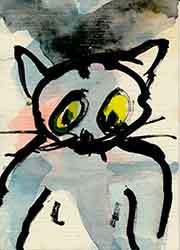
M. Vänçi Stirnemann
Artist Trading Cards
Artist Trading Cards (ATCs) are miniature works of art that have grown in popularity since their inception. They serve as a unique medium for artists to share their work and connect with others in the art community. Here’s a brief outline of the history of ATCs:
Birth of the Concept:
- The concept was developed by m. vänçi Stirnemann, an artist from Zürich, during a visit to Calgary, Alberta, Canada, for the Olympic Arts Festival in 1988, inspired by adults collecting hockey cards.
- While he was an artist-in-residence at The New Gallery in 1990, vänçi aimed to document his activities but faced high printing costs, delaying the project until 1996.
- Frustrated by these costs, he hand-produced cards, resulting in an exhibition of 1200 cards in April 1997 at INK.art&text in Zürich.
- He invited other artists to create their own cards and trade them with him at the exhibition’s closing reception.
- September 1997 was the first trading session in Calgary, Alberta, Canada at The New Gallery.
Global Spread (Late 1990s):
- The idea of exchanging artist cards quickly spread beyond Switzerland, capturing the interest of artists worldwide.
- Online communities and forums emerged, allowing artists to connect and trade ATCs internationally.
Establishment of Guidelines:
- As ATCs gained popularity, guidelines were developed, emphasizing the importance of creativity and originality in each card.
- ATCs are not for sale; they are meant for trading, promoting a spirit of generosity in the art community.
Artist Communities and Events:
- Local ATC groups and clubs formed, organizing events and workshops centered around trading and creating these cards.
- Many art fairs and exhibitions started including ATC-specific sections, further validating their artistic significance.
Diverse Styles and Techniques:
- Artists began to explore a variety of styles, techniques, and materials for their ATCs, from painting to digital art and mixed media.
- This diversity has led to a vibrant and eclectic collection of cards, pushing the boundaries of traditional art forms.
Growth of Digital ATCs:
- With advancements in technology, digital artist trading cards emerged, expanding the scope of creativity.
- Digital platforms now serve as avenues for artists to showcase and trade their work across the globe.
Current Trends:
- ATCs continue to evolve with contemporary practices, including collaborations among artists and themed trading events.
- The rise of social media has allowed for wider sharing and appreciation of ATCs, creating a dynamic global community.
Artist Trading Cards represent more than just small pieces of art; they symbolize a movement of collaboration, creativity, and connection among artists everywhere.




 Lisa Solonynko: Make Life Colourful