
What Are Artist Trading Cards
*A pdf version of this post is available at the bottom of this post.
Video Edition
I decided to make a video to go with this post. I will be making more videos about ATCs in the future. Be sure to subscribe to my Youtube to be notified when I publish new videos or livestream.
Artist trading cards and coins (ATCs) are like tiny treasure chests of creativity, crafted by artists who want to swap their mini masterpieces. They are created using everything from doodles and paint to collage and photography. It truly is a creative playground!
Trading small-scale artwork first began in the late 1990s, thanks to Swiss artist M. Vänçi Stirnemann, who started a trading frenzy in Zurich. The trend quickly caught fire globally, inviting artists of all skill levels to join the fun.
Technical Information
ATC Size Variations
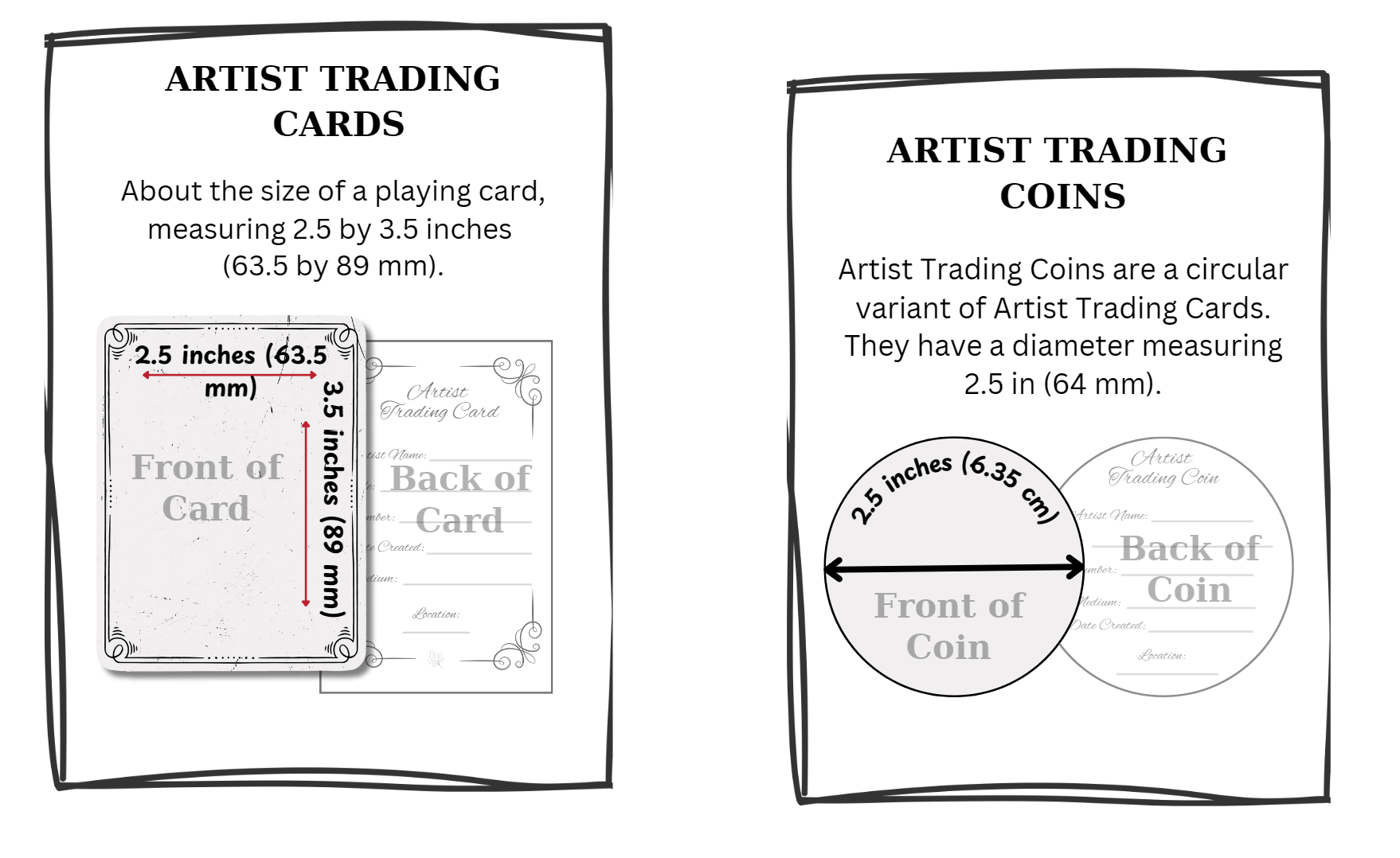
- ATC = A rectangular card 2.5 x 3.5 inches
- Coin = A round card with a diameter of 2.5 inches
- Inchie = 1 inch square
- Twinchie = 2 inch square
- Rinchie = 1 inch round
- Any medium can be used, including paint, pen, collage, fabric, stamps, etc.
- Any style can be used, including collage, abstract, portraiture, landscapes, etc.
- Information about the card and artist is written on the back.
- The final card should be thin enough to fit into the clear plastic sleeves used for baseball or other collectible cards.
- Each card is usually a one-of-a-kind piece, although some artists create limited series:
- One-off: an individual card with a unique design.
- Series: Sets of cards with a common theme and are usually numbered, such as 1 of 3 or 1/3.
- Edition: Two or more cards that have been designed to look identical.
How Does Trading Work?
Trading happens at meetups, conventions, or art events where artists can swap cards face-to-face. It didn’t take long for groups to pop up on the Internet. This allows artists to connect online and then send their treasures through the mail.
- Many online groups focus solely on trading through snail mail.
- Others allow for trading globally.
- Some only trade within specific geographic regions.
Whether online or in person, artists bring a stash of cards available for trade. Artists agree on the cards they wish to trade, and they either exchange them immediately or send them by mail at the earliest opportunity.
Structured groups and individuals typically operate under their own set of rules. These regulations may be tailored to a specific trade or could be broader guidelines. It’s essential to understand these rules before making a commitment to any trade.
Learning the Lingo
- ACEO = Art Cards Editions and Originals (cards for sale)
- HD/HP = Hand Drawn/Hand Painted
- HC = Hand Coloured
- HS = Hand Stitched
- MM = Mixed Media
- RAK = Random Act of Kindness
- CP = Cross Posted (shared in multiple groups)
- WIP = Work in Process
- NFT = Not for Trade
- UFT = Up for Trade
- AFT = Available For Trade
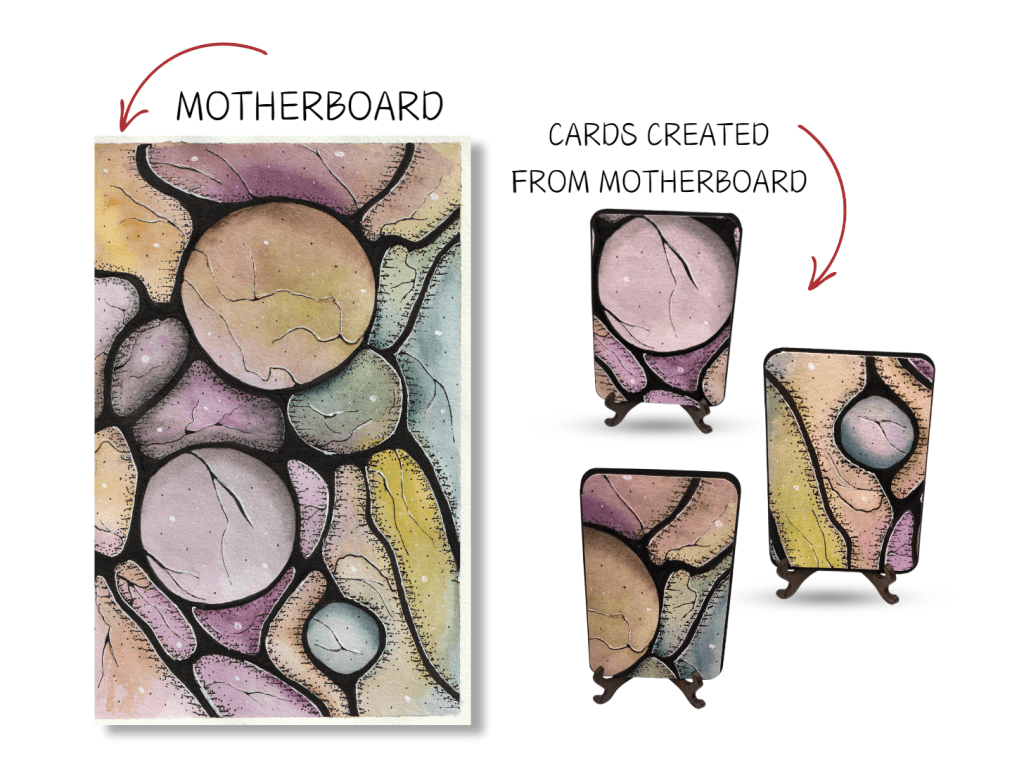
- Motherboard = Some artists will create a larger art piece that is then cut up to create several cards.
- JAM – Just Add More (Round Robin where a compilation of artists creates cards)
- “Extras” = Anything over and above sent with the agreed upon ATC(s). Although not necessary, many traders send extras. Common extras include embellishments, cancelled stamps, stickers, ribbons, backgrounds, papers, and extra ATCs.
ATC Etiquette
- It is generally considered inappropriate to trade cards that have been received from another artist or to give them away. Cards are intended to be collected rather than re-traded simply because you may lose interest or not enjoy them.
- ATCs are not sold for monetary gain. ACEOs, on the other hand, are sold.
- Some people request cards that are, or are NOT, made of specific mediums. If agreeing to a trade, these requests should be respected.
- Once you’ve agreed on a trade and your cards are ready to go, get them mailed out ASAP! Plus, keep your trading buddy in the loop—let them know when your cards are on their way and when cards sent to them safely land. Remember, the postal service can be unreliable.
Sending ATCs in the Mail
- Although not necessary, I like to put cards into plastic protective sleeves prior to mailing.
- To help protect the card from being bent or damaged, I include an additional piece of cardboard.
- Be sure to provide the right amount of postage for the weight and thickness of the envelope.
- Double check that the address is correct.
Storing/Organizing ATCs
- I store each card in protective plastic sleeves.
- All cards I receive are put into card collector binder pages. These protect the cards and make it easy to flip through and look at the collection as it grows.
- Using a spreadsheet is a great way to keep track of trades and the addresses of those I trade with.
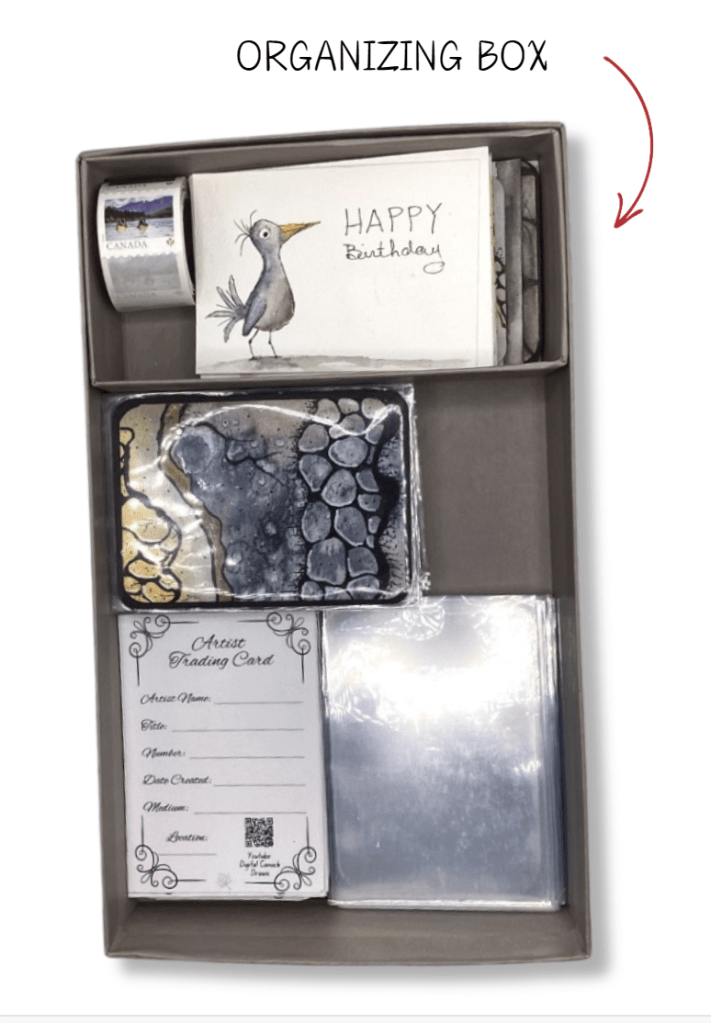
- I have a box dedicated to holding the pieces I need to finish my cards for trade:
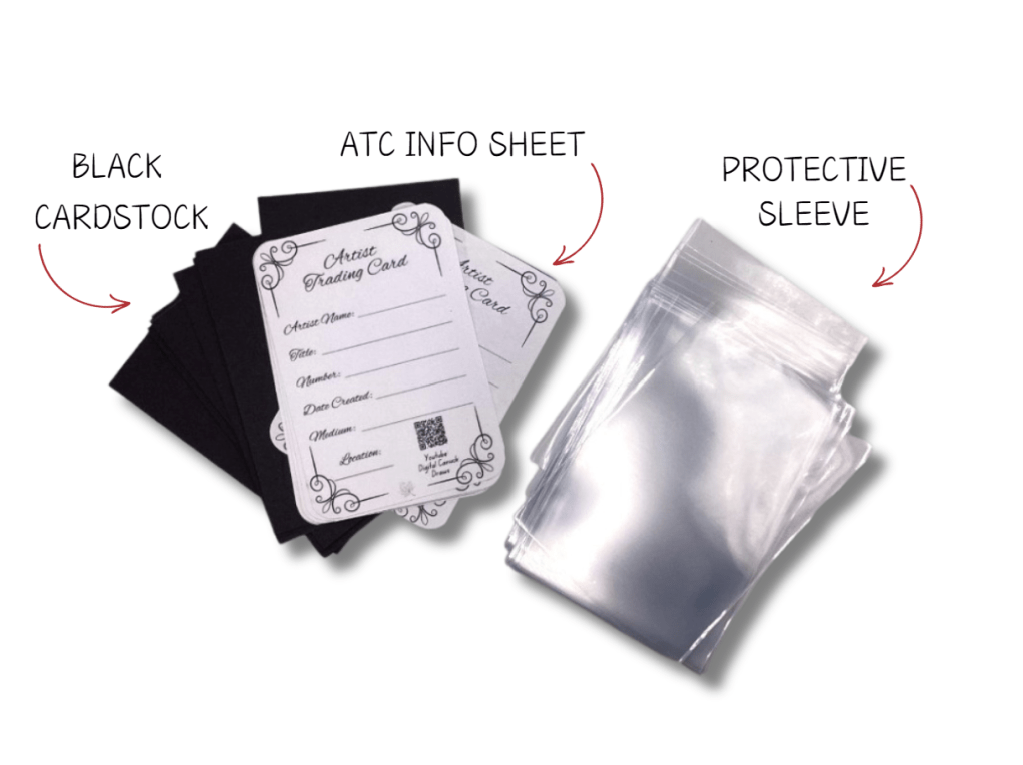
- Watercolour is my medium of choice, and I glue my artwork onto a piece of black cardstock. This is just how I do it; other artists do not add this layer. The ATC info can simply be written directly on the back of the artwork.
- I glue my ATC information sheet to the back of the black cardstock
- Plastic sleeves
- Postage stamps
- Envelopes

ATC Info PDF
All of the info above is included in this pdf. Download and print it off so that you will have it for easy reference. This pdf also includes the ATC templates.
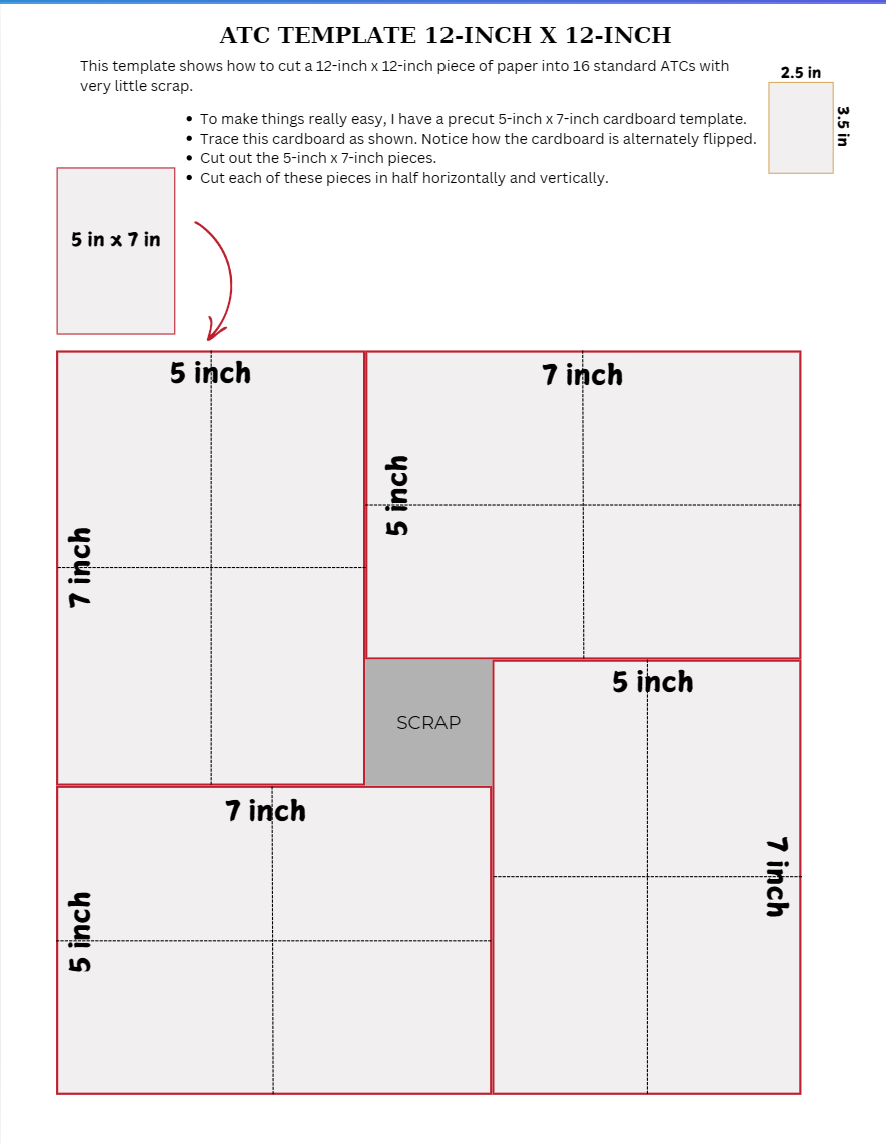
ATC Template
This pdf shows how to cut a 12-inch x 12-inch sheet into 16 standard ATC cards
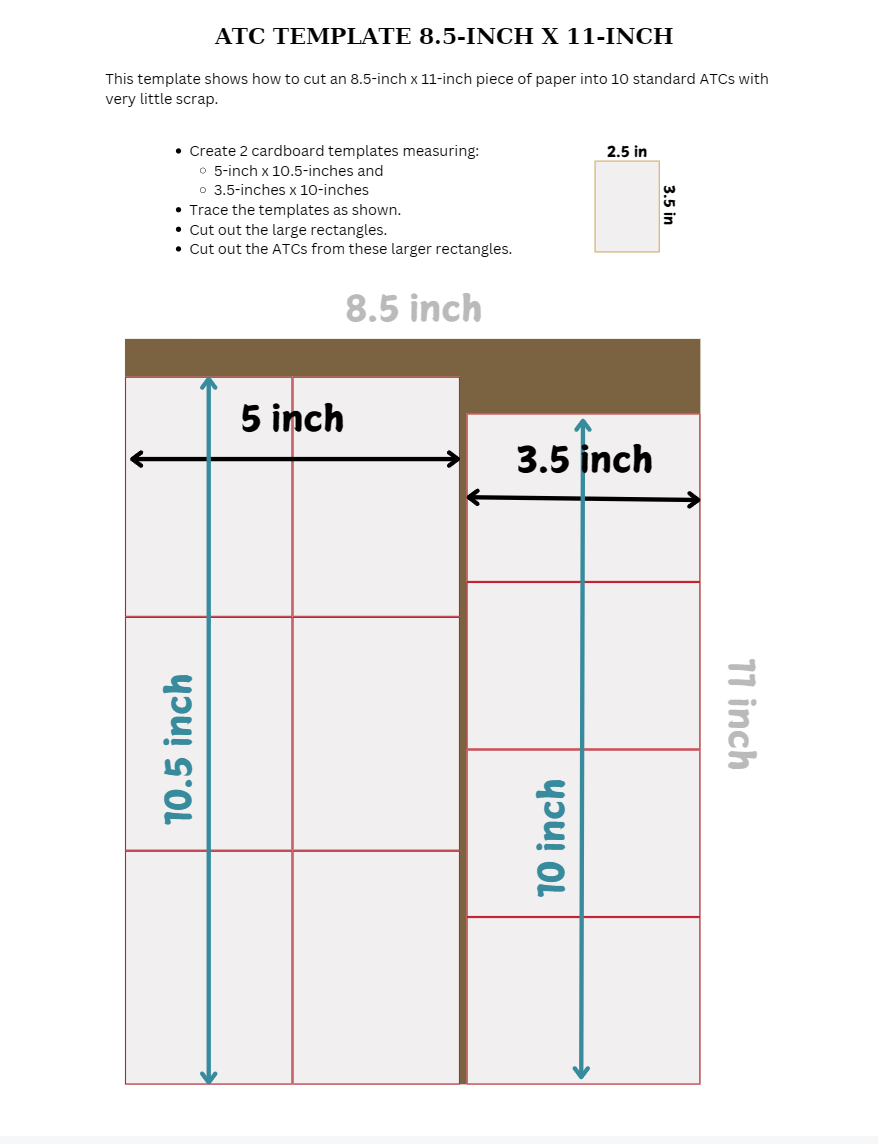
ATC Template
This pdf shows how to cut a 8.5-inch x 11-inch sheet into 10 standard ATC cards.




 Lisa Solonynko: Make Life Colourful