
In the previous post, I talked about our family getting a 3D printer as a family Christmas present.
I’ve always been fascinated by the artistic possibilities of 3D printing! One really exciting area to explore is lithophanes. They offer such a unique way to combine creativity and technology!
What are 3D Printed Lithophanes?

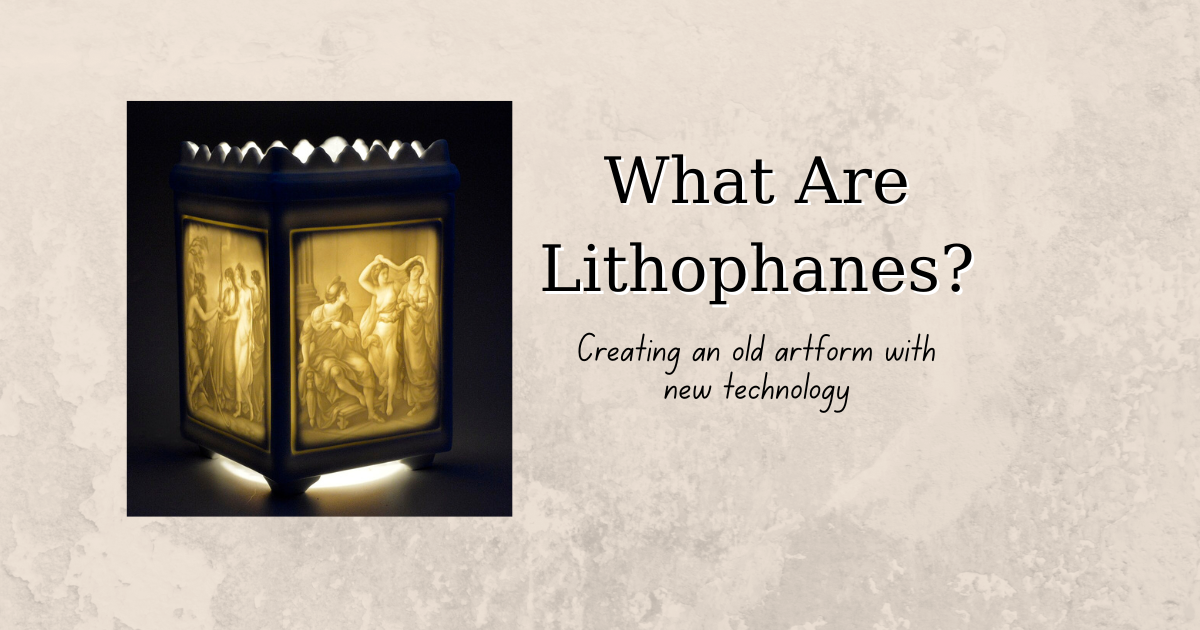
Historically, lithophanes were made of porcelain or wax. But, a 3D-printed lithophane is a modern adaptation of the traditional lithophane art form. This process involves creating a three-dimensional image on a thin panel, typically made from plastic, which reveals a detailed picture when backlit.
The key to a lithophane’s visual impact lies in its varying thickness across the panel; thinner sections allow more light to pass through, creating lighter areas, while thicker sections block more light, resulting in darker areas. This technique produces a depth effect similar to a grayscale photograph.
3D printed lithophanes offer a contemporary way to explore a historical art form, combining the charm of traditional craftsmanship with the flexibility and innovation of modern technology.
Lithophanes & My Art
After reading up on lithophanes, my mind was reeling about how I could incorporate it into my own art practice.
I decided to have a stab at recreating one of my pieces in the form of a lithophane.
One of my Crazy Huggins Zentangle designs seemed like it would be perfect for this little experiment. This is what I did:

I scanned in my ATC Zentangle design to create a digital copy.
I then uploaded the digital image to itslitho.com and it converted it to a black and white version. I double checked the sizing and downloaded the .stl file that would go into my 3D printer.


Now was the time to import the .stl file into my 3D printer and let the magic happen.
After about 1.5 hours, this interesting piece was created. The texture can clearly be seen here, but the detail cannot.
The magic becomes clear ones the lithophane is held up against a lightsource.
The details come to life and even the shading is clear.
All this detail and only about 2 mm thick!

I think this art form is really interesting and definitely worth exploring! The results were amazing, and what’s even better is that there wasn’t any wasted filament from the printer.
Lithophanes and Accessibility
Lithophanes can make art accessible to visually impaired individuals by transforming visual images into accessible experiences.
When backlit, the thinner areas allow more light to pass through, while the thicker sections block light. Using light in this way can help those who rely on light and shadows see a piece of art come to life.
For those with no sight, lithophanes can bring the image to life in a way that relies entirely on touch other than sight.
The tactile quality allows people to feel the contours and details of the artwork, providing an understanding of the image’s shapes and forms.
By exploring the subtleties of the lithophane through touch, individuals can gain an appreciation for the art that transcends traditional visual experiences. In this way, lithophanes serve as an innovative bridge between technology, art, and accessibility.
I hope that everyone is able to experience art in the form of a lithophane.